01 · Where it started
I live inside AI tools. And every day, they forgot me.
I build with AI all day, most of the things on my work page started as a prompt. But every session began the same way: re-introducing myself, re-pasting my context, re-explaining who my people are and what I'm working on. The model could answer almost anything, yet it knew nothing about me.
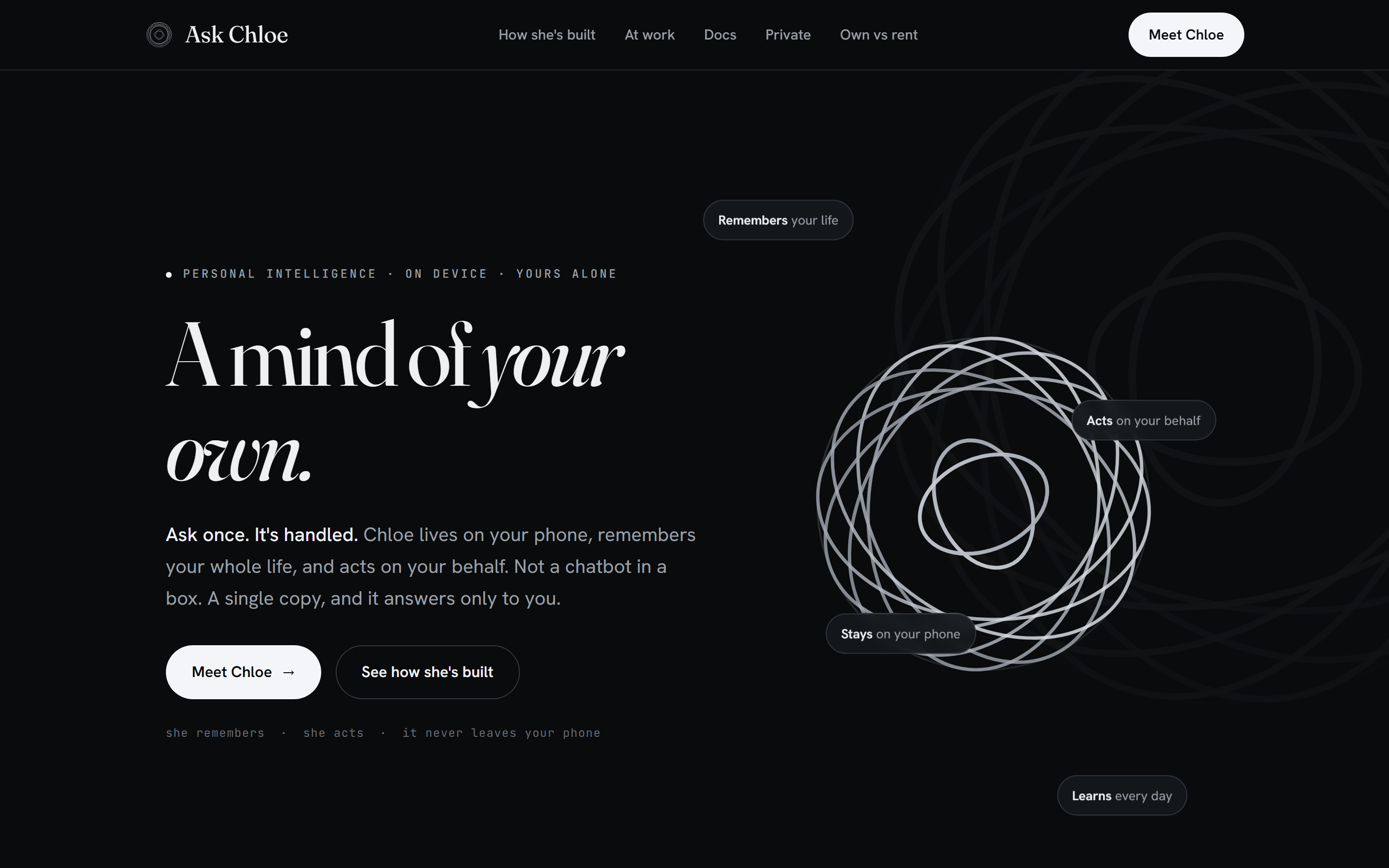
That gap is what nagged at me. I didn't want a smarter chatbot. I wanted an assistant that remembered my whole life, that I didn't have to re-teach, and that could actually do things on my behalf instead of just telling me how. So I started building it.
02 · The market read
Brilliance became a commodity. A mind that's yours didn't.
When I looked at the landscape, every serious AI was the same shape: one model, rented by a billion people, identical for everyone, and stateless by design. It forgets you the moment you close the tab, runs on someone else's servers, and often trains on what you typed. It's something you visit, never something that's yours.
The reason is structural: the big labs sell scale, one model for all, and true memory and ownership cut against that business. That's the opening. The insight I built the whole thing around:
Whoever owns the memory owns the relationship.
And the timing finally worked. Three curves crossed: models can now act, not just answer; phones are powerful enough to host a real assistant; and people have started to care about privacy enough to not want their whole life on a shared cloud.
03 · The bet
One mind per person, on your own device.
The idea I committed to: a personal AI that lives on your phone, remembers your whole life, and acts on your behalf. Not a feature you sell by the seat, a new default. I wrote everything around one line, the positioning that had to be true end to end:
The shift from the AI you visit to the AI that's yours.
Every decision after that, the brand, the architecture, the site, had to prove that sentence or it didn't ship.
04 · How I built it
Not one model answering. Seven brains, one memory.
A single model can answer a question, but it can't be a chief of staff. So Chloe isn't one model, she's a society of seven brains, reasoning, memory, learning, growth, hands, code, and money, all reading and writing to one private memory. The growth and learning brains are the difference: she improves over time instead of resetting.
The hard parts weren't the answers, they were everything around them: keeping the whole system running close to the device so context never has to leave the phone; giving her real hands, controlling the device, driving apps, her own browser, behind safety gates so nothing happens without approval; and keeping one shared memory coherent across every surface so she's the same mind wherever you reach her.
05 · What it became
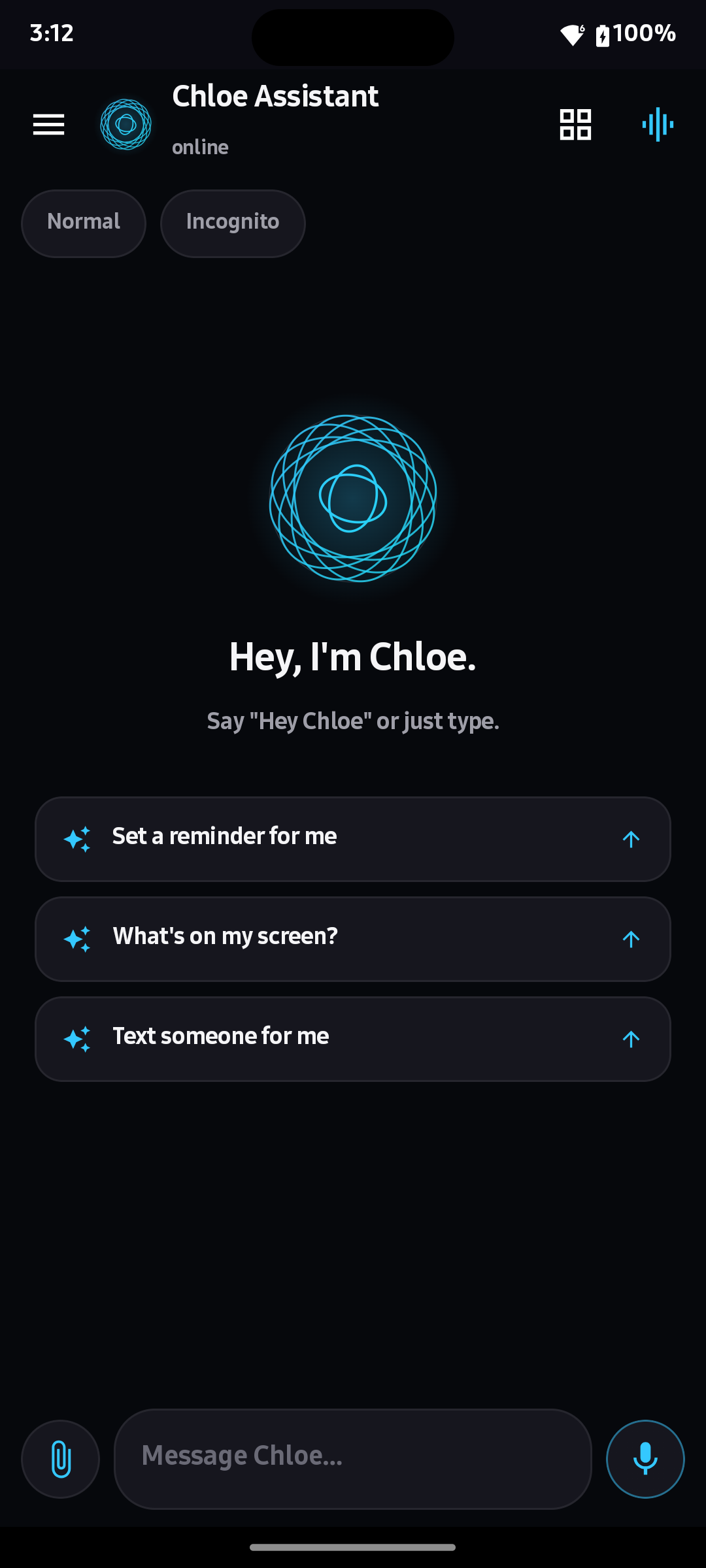
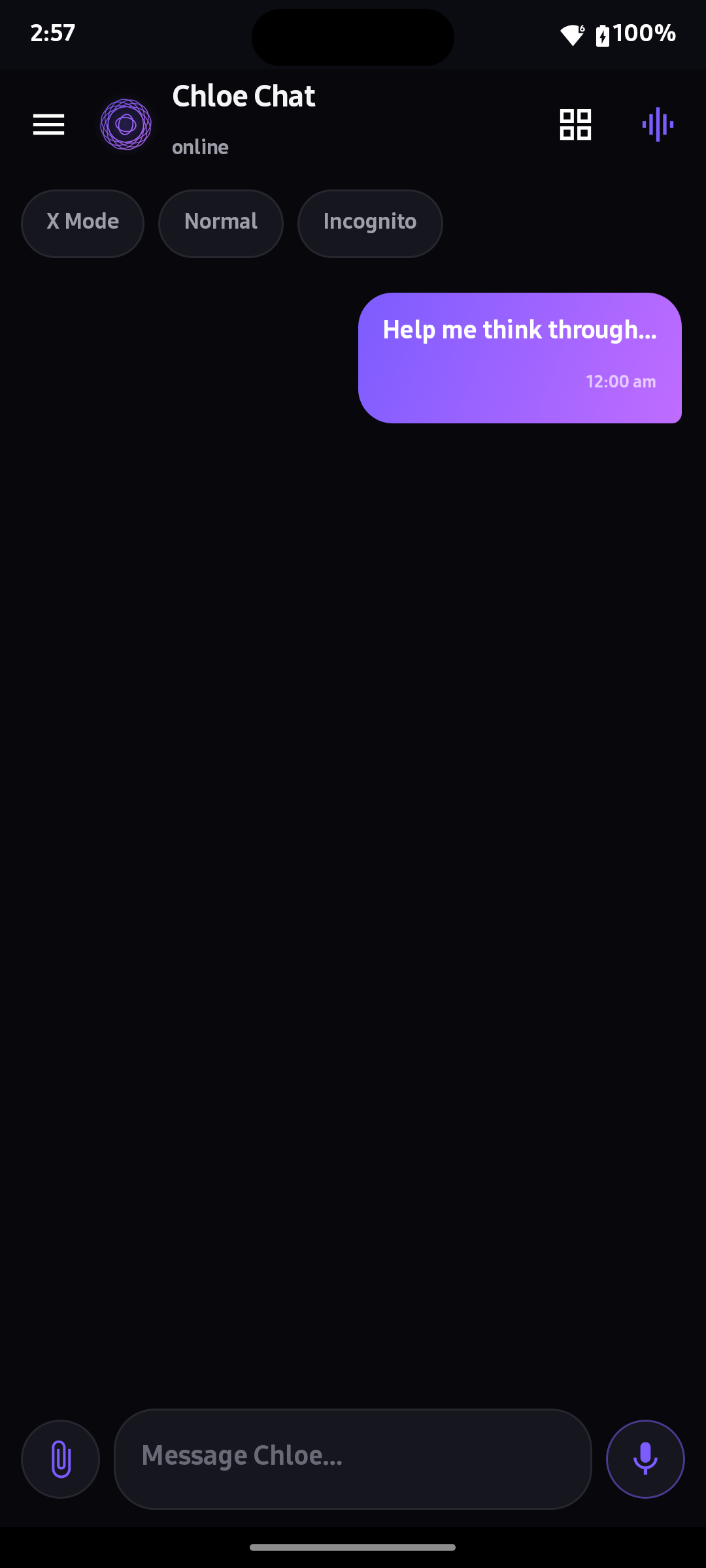
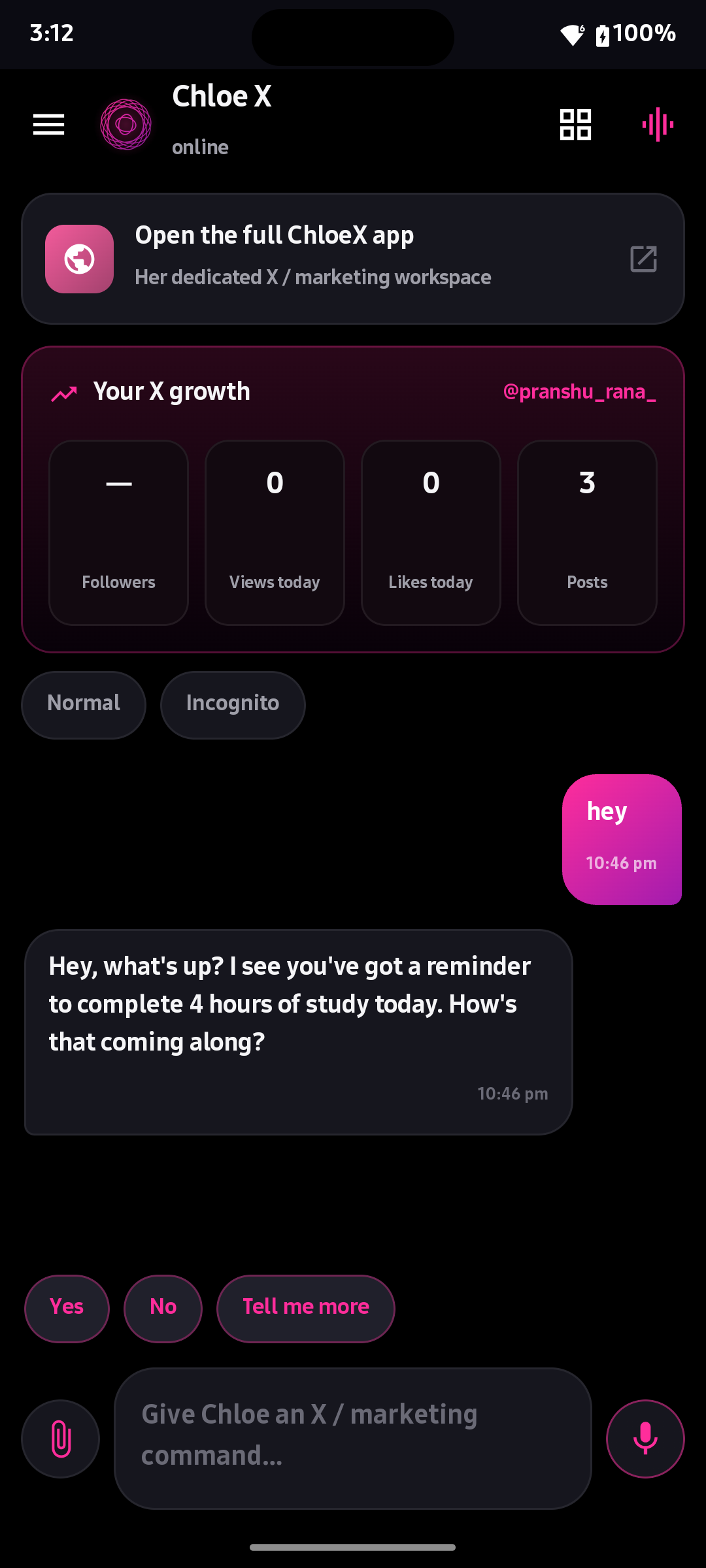
One app. Five surfaces.
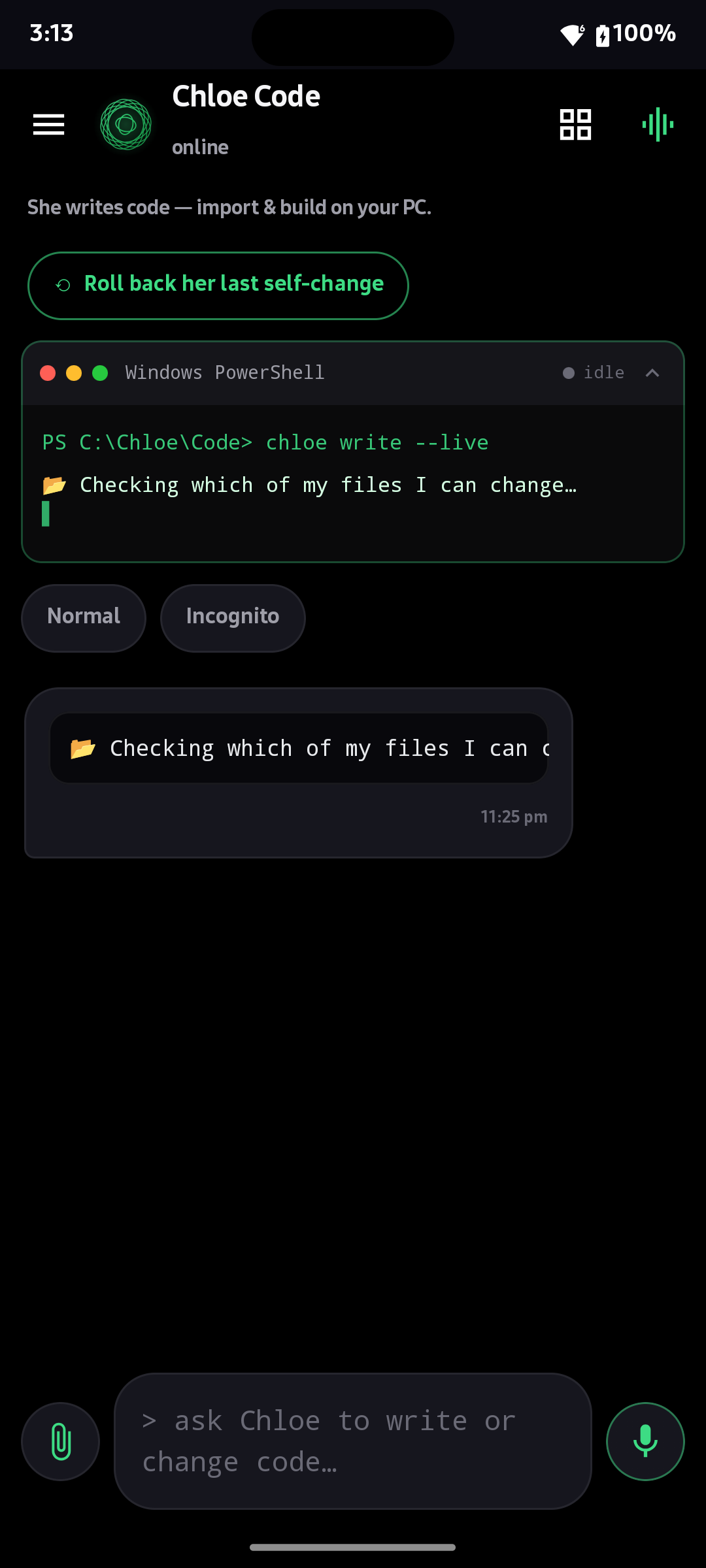
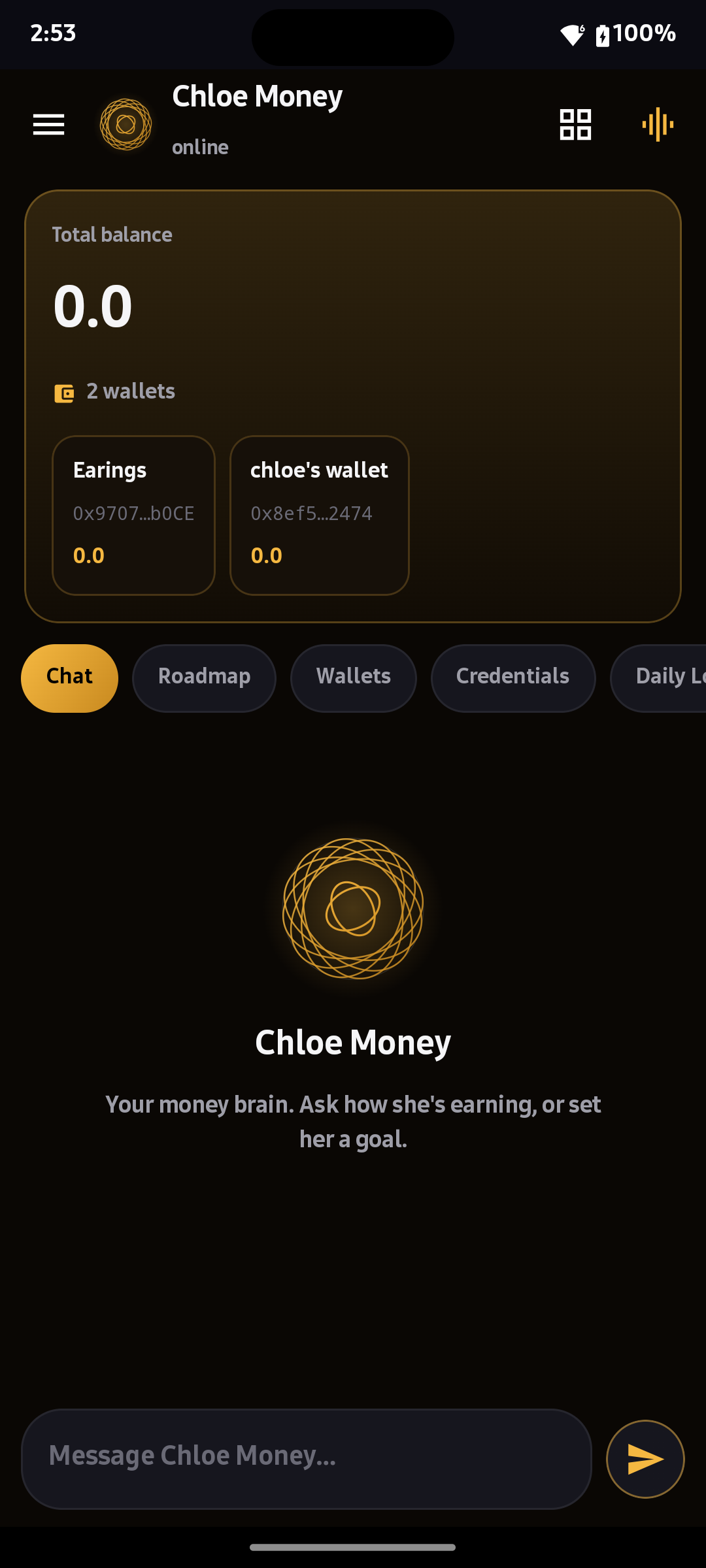
Assistant, Chat, X, Code, and Money, five ways to reach her, one mind and one memory behind all of them, running on a real phone today.
06 · What it took
Solo, and it was never just code.
To build this alone I had to be the strategist, the brand designer, the product architect, the engineer, and the writer. Each was a real job. The brand was a deliberate fight: everything in AI reads as charcoal and purple, so Chloe had to feel warm and owned, the kind of thing you'd actually trust with your whole life.
Then the product, the seven-brain system running on a real device. Then the site, to make a category-sized idea land in about thirty seconds. Building across brand, product, and backend at the same time taught me more than any one of them would have on its own.
07 · Where it is now
A working prototype, on a real device.
Chloe runs today. She executes real commands end to end: controls the phone, opens and drives apps, creates and posts content, writes code, and makes payments on command, under approval. Five surfaces, one shared memory, voice wake-word, on-screen awareness, and her own browser, all on a single device.
08 · What I took from it
The moat was never the model.
Anyone can rent intelligence now. What can't be rented is the memory and the ownership, the version that's yours alone. That was the whole bet, and building it proved out how I work: find the real gap, take a sharp position, and build the entire thing, brand to backend, until it's real and running.